Technology
Two systems, designed so one does not depend on the other.
The sensing layer is designed to be simple and self-contained, and to keep working when the parts around it do not.
The sensing layer
Spatii is a pair of glasses. The electronics sit in the frame and temples, and it is worn the way ordinary glasses are worn.
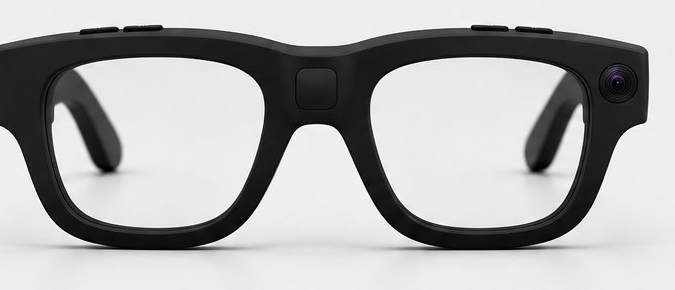
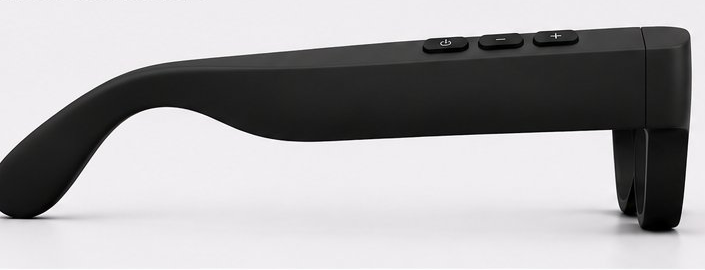
Senses the space
A depth sensor reads the area in front of the wearer many times a second, building a picture of what is near and what is open — including objects at head and torso height that a cane cannot reach.
Conveys it through touch
Distance and direction are encoded as low-frequency vibration through bone-conduction transducers resting on the temples. At these frequencies and levels the cue is intended to be perceived as vibration rather than as sound, so that speech, traffic and the other cues people navigate by remain audible. Whether it achieves that without masking is one of the things the planned study is designed to measure.
This layer is designed to run entirely on the device itself, without a network connection and without needing the phone to be awake or present.
The prototype
What we have actually built.
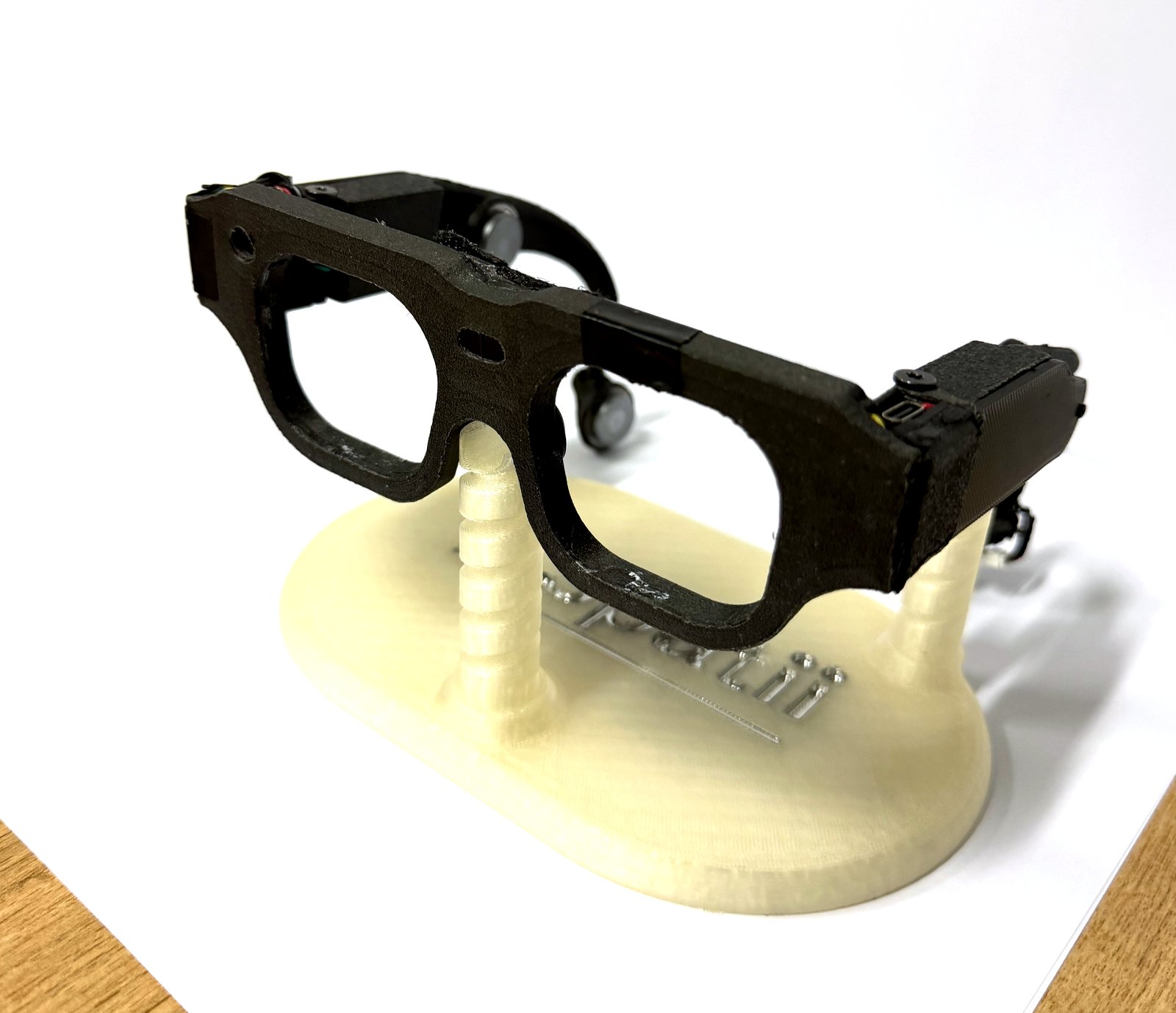
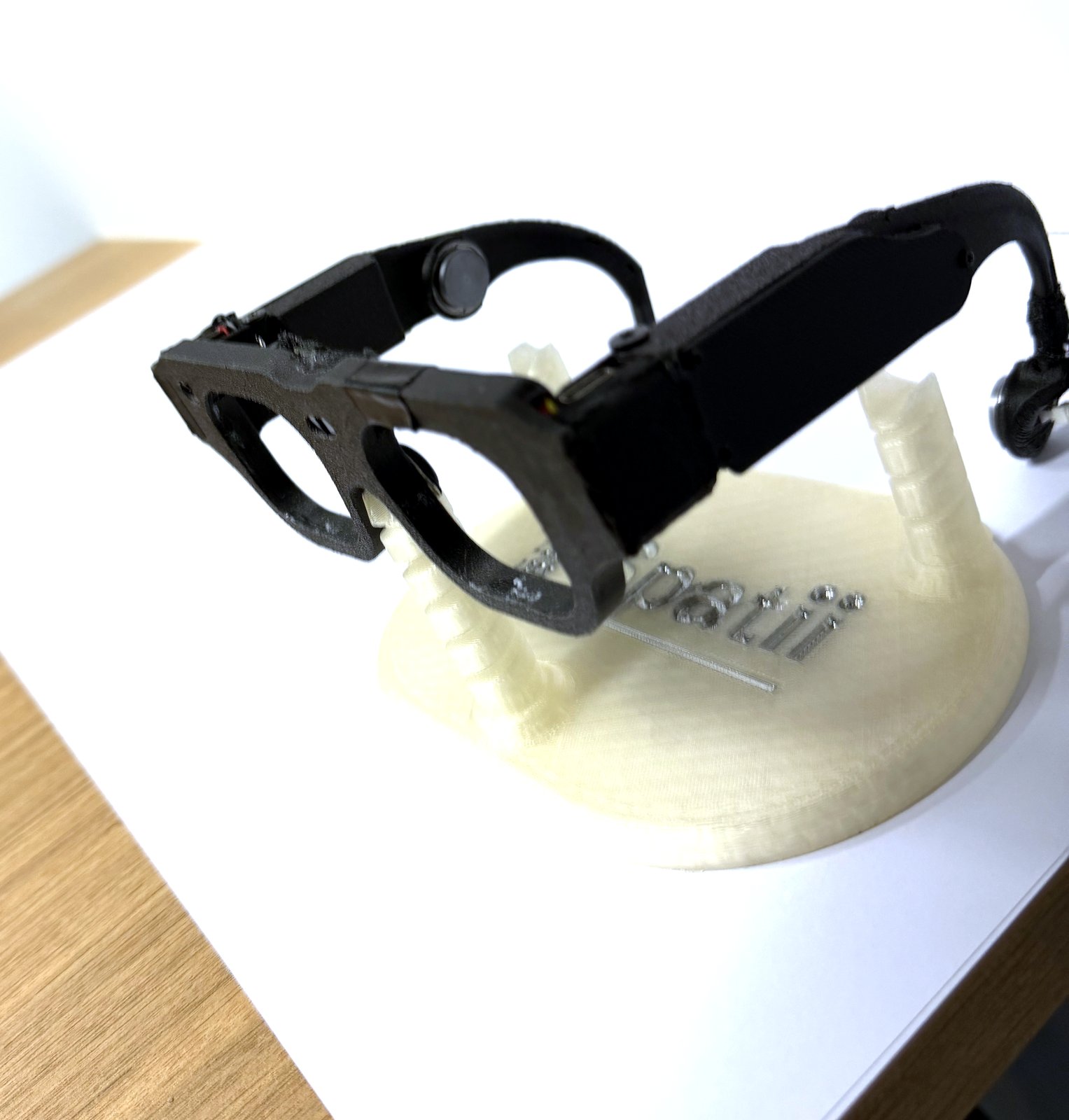
This is the current working prototype, revision 4 — the hardware we build and test on today. The industrial design above is where it is heading for production.
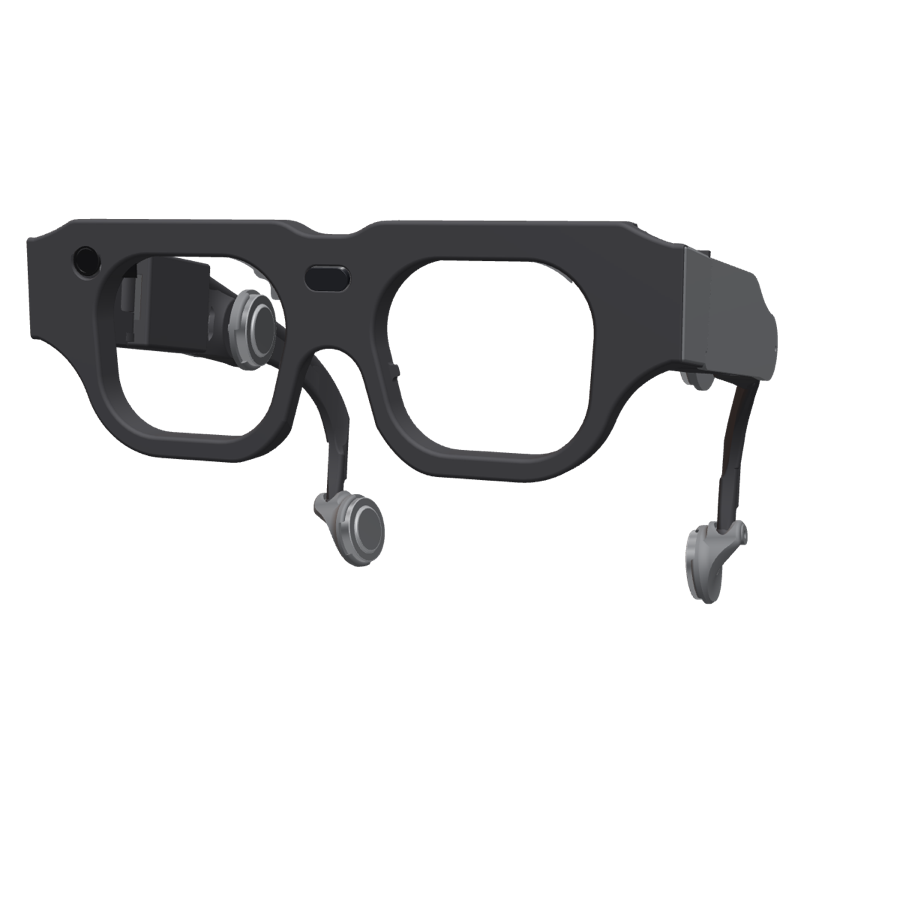
The whole assembly
A spectacle frame carrying the sensing electronics in the brow and both temples. Everything the device needs to work is on board.
The depth sensor
Set into the brow, above the bridge. It reads the space in front of the wearer continuously, building the picture of what is near and what is open.
The transducers
Bone-conduction transducers sit against the temples, front and rear on each side. They deliver the low-frequency cue that encodes distance and direction.
The camera
Mounted at the outer edge of the frame front. It is used only when the wearer asks for a description, and the sensing layer does not depend on it.
Buttons and charging
Physical controls along the top of each temple, reachable without looking, and a charge port on the left arm. No screen, and no phone required to operate the sensing layer.
The description layer
A camera and on-device artificial intelligence can describe a scene, recognise objects, and help locate belongings — on request, when the wearer asks for it.
This layer is additive by design. The sensing layer does not depend on it, so if the description layer is switched off or unavailable, the sensing layer is intended to continue operating independently.
Private by default. The sensing layer runs on the device, and its data never leaves the glasses. The description layer operates only on explicit request, never continuously and never in the background.
Designed to sit alongside the cane, not replace it
The cane and the guide dog are proven mobility tools with decades of training practice behind them. Spatii is designed to add a layer of spatial awareness on top of them — a supplementary aid, used with the primary aid, never instead of it.
We are deliberate about this language because we are deliberate about the engineering behind it. A device that invites over-reliance is a device designed badly.